

Achieving a straighter smile no longer requires the discomfort or visibility of traditional braces. Invisalign provides a clear, comfortable, and effective alternative, allowing patients to straighten their teeth discreetly while enjoying modern cosmetic dentistry results.
If you’re considering Invisalign, you may be curious about how the treatment works. This guide explains each stage of the Invisalign treatment process, detailing what to expect throughout your path to a straighter smile.
How Does the Invisalign Treatment Process Work?
Invisalign is a modern orthodontic treatment that uses a series of custom-made clear aligners to move your teeth into their ideal positions gradually. Each aligner is designed from a detailed digital scan of your teeth and programmed to apply controlled pressure to specific teeth.
When patients ask me how Invisalign works, I explain it this way: rather than using brackets and wires to pull the teeth, Invisalign uses a carefully planned sequence of transparent trays. Each tray makes very small movements, usually a fraction of a millimeter at a time. Over several months, these small adjustments add up to significant changes in tooth alignment and bite.

The success of Invisalign depends largely on consistency. Aligners should be worn for 20 to 22 hours per day and removed only for eating, drinking anything other than water, brushing, and flossing. Most patients switch to a new set of aligners every one to two weeks, depending on the treatment plan.
In many cases, we place small tooth-colored attachments on certain teeth. These attachments act like handles that help the aligners apply more precise forces. For some patients, a small amount of enamel reshaping (called interproximal reduction or IPR) may also be recommended to create the space needed for proper alignment.
One of the greatest advantages of Invisalign is that the treatment is planned digitally from the beginning. Before you start, we can show you a simulation of how your teeth are expected to move and what your final smile may look like. This allows patients to understand the process clearly and gives us excellent control over each stage of treatment.
Here’s also a helpful video for the proper placement of Invisalign that can help you:
Who Is a Good Candidate for Invisalign?
Invisalign is effective for many individuals, especially those with mild to moderate misalignments, such as overbite, underbite, crowded teeth, gaps, or crossbite. It’s an ideal option for those seeking a discreet treatment that doesn’t involve metal brackets or wires. However, more complex orthodontic issues may require other treatments. A consultation with your orthodontist will determine if Invisalign is the best choice for your needs.
Read more: Invisalign Cost
Step-by-Step Invisalign Treatment Process
Here is the step-by-step process of Invisalign, brought to you by an infographic picture, followed by expert information:
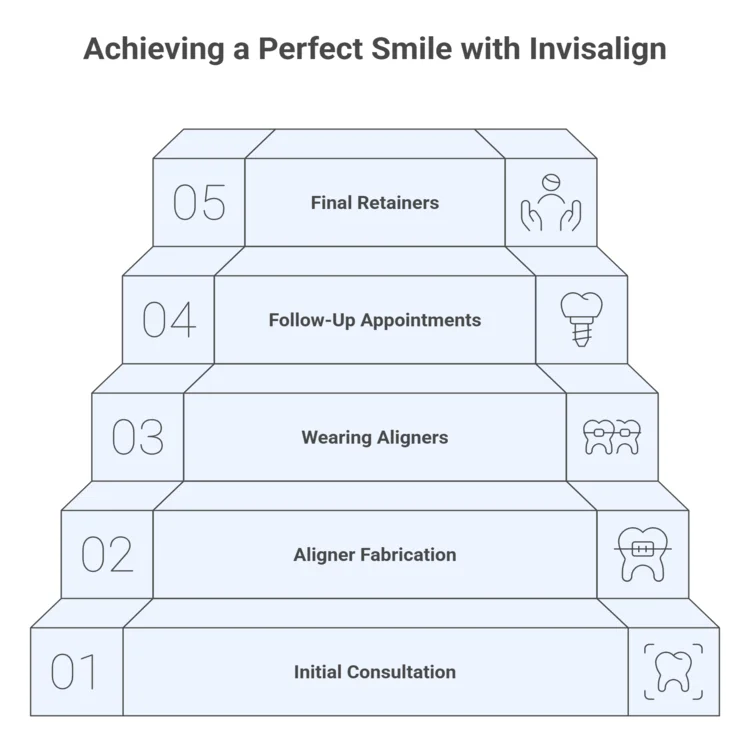
Initial Consultation and Digital Scan
Your Invisalign treatment begins with a consultation, where your dentist will evaluate your oral health and decide if Invisalign is the right choice for you. During this appointment, a digital scan of your teeth will be taken by our experts. This scan creates a 3D image of your teeth, which helps develop an accurate treatment plan. The digital model also lets you preview how your teeth will shift over time and see the possible outcome.
Custom Aligner Fabrication and Fitting
Once the digital scan is complete, your aligners are custom-made to fit your mouth perfectly. Using advanced 3D imaging technology, a treatment plan is designed to make sure that your teeth will move gradually toward their correct positions. The aligners are fabricated with precision, and your dentist will fit the first set during a follow-up appointment.
Ready to get started with Invisalign?
Schedule your consultation at Smile Plus Dentistry today to discuss your treatment plan and begin your journey to a perfect smile.
Wearing and Changing Aligners
Each set of aligners is worn for approximately 1 to 2 weeks, for about 20 hours per day. They should only be removed for eating, drinking, and brushing your teeth. As you move through your treatment, you will change to a new set of aligners, each one shifting your teeth a little further. Regular appointments with your dentist determine the progress of your treatment.
Follow-Up Appointments and Adjustments
Throughout your treatment, regular follow-up appointments will be scheduled to track your progress. These visits ensure your teeth are moving as planned, and they also allow us to make any necessary adjustments. If needed, new aligners will be provided to continue your treatment. Consistency is key, and attending these appointments ensures that your treatment stays on track.
Final Retainers and Post-Treatment Care
Once your treatment is complete and your teeth have moved into their desired position, you’ll be given retainers to wear. Retainers are crucial for maintaining your teeth in their new positions and preventing them from shifting back. At Smile Plus Dentistry, we provide post-treatment care instructions and follow-up appointments to ensure your results last.
How Long Does the Invisalign Treatment Process Take?
The length of treatment can vary based on individual needs. On average, the timeframe of Invisalign treatment takes between 12 and 18 months, but some patients may see results sooner. For minor alignment issues that aren’t very critical, treatment may be completed in 6 months, while more complex cases may require a longer duration.
For more complex cases involving tooth infections, root canal service may be necessary, and it has always been crucial to address necessary root canals before starting Invisalign treatment.
Here’s a detailed breakdown of what happens during an Invisalign treatment process:
| Stage | What Happens | Typical Timeline |
|---|---|---|
| Initial Consultation | Examination, digital scan, discussion of goals, and confirmation that Invisalign is appropriate | 30–60 minutes |
| Digital Treatment Planning | Attachments may be placed, and you receive your first set of aligners | 1–3 weeks |
| Aligner Fabrication | Your custom aligners are manufactured | 2–4 weeks |
| Delivery Appointment | Attachments may be placed, and you receive your first sets of aligners | 1–2 hours |
| First Adjustment Period | Mild pressure and speech changes as you adapt to wearing aligners | 3–7 days |
| Active Treatment | Aligners are changed every 7–14 days, with checkups every 6–12 weeks | 3–24 months depending on case complexity |
| Refinements (If Needed) | Additional aligners are made to fine-tune tooth positions | 1–6 months |
| Retention Phase | Retainers are worn to maintain the final result | A custom treatment plan is created using specialized software |
The table below also explains how long the Invisalign treatment process typically takes based on the severity of the case:
| Case Type | Average Treatment Time |
|---|---|
| Minor spacing or mild crowding | 3–6 months |
| Moderate alignment issues | 6–12 months |
| Complex bite problems | 12–24 months or longer |
In my clinical experience, the patients who complete treatment on schedule are those who wear their aligners exactly as instructed. Even missing a few hours per day can slow tooth movement and increase the overall treatment time.
The Invisalign website also points to 20-22 hours of wearing a day:
…typically people wear their Invisalign aligners 20 to 22 hours a day to get the best results.
How Long Does Invisalign Treatment Usually Take for Mild Spacing in Surrey, BC?
For patients with mild spacing between the teeth, Invisalign treatment is often one of the fastest orthodontic options. In most cases, treatment takes approximately 3 to 6 months.
Mild spacing means there are small gaps between the teeth, usually caused by genetics, tooth size differences, or habits such as tongue thrusting. Because the teeth generally need only limited movement, the treatment tends to be straightforward and highly predictable.
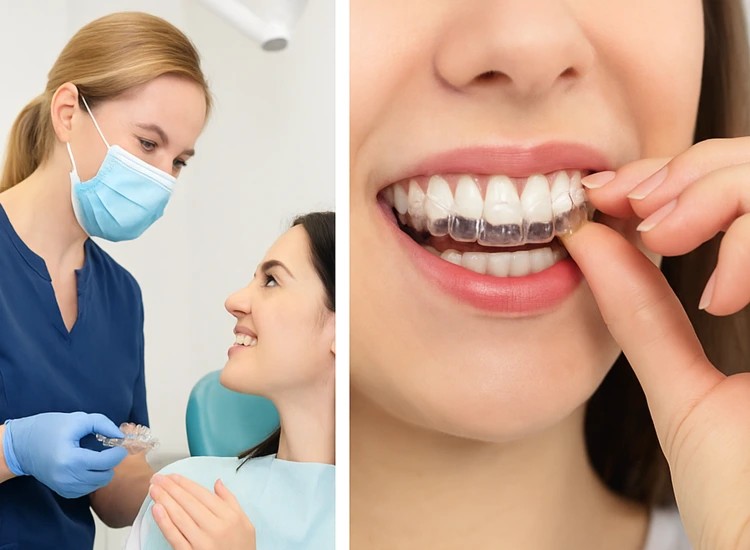
Some patients begin noticing visible improvement within the first 6 to 8 weeks. However, achieving an ideal result involves more than simply closing the gaps. We also need to ensure that the roots are properly aligned and that the bite remains healthy and stable.
Several factors influence how quickly spacing can be corrected:
- The size and number of gaps
- The condition of the gums and supporting bone
- Patient compliance with wearing aligners for 20–22 hours daily
- Whether refinements are needed at the end of treatment
For very small gaps, treatment may be completed in as few as 10 to 20 aligners, which often translates to about 3 to 5 months. Cases involving multiple spaces or bite adjustments may take closer to 6 months.
In my experience, mild spacing cases respond exceptionally well to Invisalign because tooth movement is typically efficient, and patients can see progress early in the process. With proper wear and regular monitoring, the results are usually both predictable and long-lasting.
Feel Confident About Your Treatment by Trusting the Invisalign Process
Invisalign offers a discreet and effective solution for straightening your teeth. By following the treatment process and attending regular check-ups, you can achieve the beautiful, straight teeth you’ve always wanted.
You and your family can count on the Smile Plus team to get the best Invisalign treatment in Surrey based on your needs and your personal medical background. Contact our team, and we will help you with any other questions you might have.
FAQ
Here are the most frequently asked questions about the Invisalign treatment process, besides the heading that we had above for the most common ones:
-
What are the main steps in the Invisalign treatment process?
The steps include an initial consultation, digital scanning, creating custom aligners, wearing and changing the aligners, regular follow-up appointments, and wearing retainers to maintain results.
-
How long does Invisalign treatment take?
Treatment typically lasts from 12 to 18 months, depending on the severity of the alignment issue.
-
Do I need a consultation before starting Invisalign?
Yes, a consultation is required to assess your eligibility for Invisalign. Your orthodontist will assess your dental health and create a customized treatment plan.
-
How are Invisalign aligners customized for my teeth?
Aligners are customized using 3D imaging technology, ensuring that each aligner fits your teeth precisely and gradually shifts them into the desired position.
-
How often do I need to change my Invisalign trays?
You’ll change your aligners every 1-2 weeks. Your orthodontist will provide a schedule to ensure proper progression.
-
Do I need attachments or buttons during Invisalign treatment?
Some cases may require small attachments or buttons on your teeth to assist with specific movements, especially for more complex issues. These are temporary and removed once treatment is complete.
-
What happens if I lose an Invisalign aligner?
Contact your orthodontist immediately if you lose an aligner. You may be advised to wear the previous aligner until a replacement is available.
-
How should I care for and clean my Invisalign trays?
Clean your aligners by brushing them gently with a soft toothbrush and rinsing them with lukewarm water. Avoid hot water, as it may warp the aligners.
-
Do I need to wear a retainer after Invisalign treatment?
Yes, wearing a retainer after treatment is essential to maintain the position of your teeth. Your orthodontist will provide instructions on how often to wear your retainer.
Have any questions about the Invisalign process?
Share them in the comments because the Smile Plus team loves to help you along the way.
No Comments