
As you know, we’ve entered the school season, and children are getting back to their daily routines. It’s a good time to check their habits, from what they eat during school hours to how well they brush and floss their teeth. A back-to-school dental checklist helps parents keep track of their children’s oral health. It’s also a good time to schedule a dental visit and look into pediatric services if a child needs extra care before the school year gets busy.
From brushing and lunchbox choices to sports mouthguards and signs of tooth decay, here’s what to check before your child settles into the school routine.
Back-to-School Dental Checklist for Surrey Families
Before the school year gets busy, take a few minutes to check your child’s toothbrush, brushing routine, lunchbox, and sports gear. These are simple things to sort out now rather than deal with later.
Schedule a Dental Checkup if Your Child Is Due
Check when your child last visited the dentist and whether another examination is due. Children with recent cavities, ongoing tooth sensitivity, or gum problems may need an appointment sooner than those with stable oral health.
During a dental checkup, our dentists examine the teeth and gums for signs of decay or inflammation. We also assess how permanent teeth are developing and identify problems that may require treatment.
If your child already follows a recommended recall schedule and has no new concerns, an additional appointment solely because school is starting may not be necessary.
Get Back Into a Regular Brushing and Flossing Routine
Summer holidays often change children’s morning and bedtime routines. Re-establishing consistent brushing times before school starts can make daily oral care easier to maintain.
Children should brush for two minutes twice daily with fluoride toothpaste and clean between teeth that touch. Younger children need help reaching their back teeth and controlling the toothbrush.
Replace Worn Toothbrushes and Dental Supplies
- Check your child’s toothbrush before the school term begins. Bent or frayed bristles may not remove plaque effectively, especially around the gumline and back molars.
- Choose a soft-bristled toothbrush with a head that fits comfortably inside your child’s mouth. Replace it approximately every three to four months, or earlier if the bristles become worn.
- Make sure your child has fluoride toothpaste and suitable floss or interdental cleaning supplies. A toothbrush with a built-in timer may also help children who frequently stop brushing too early.
Pack Tooth-Friendly School Lunches and Snacks
School lunches influence how often your child’s teeth encounter sugar and acid. Frequent snacking on sweet foods gives oral bacteria repeated opportunities to produce acids that contribute to cavities.
Consider these lunchbox options:
- Whole fruits: Apples, pears, and other fresh fruits are preferable to sticky fruit snacks or frequent juice consumption.
- Crunchy vegetables: Carrot sticks, cucumber, and bell peppers provide a snack without added sugar.
- Cheese and plain yogurt: These provide calcium and can replace sweetened dairy snacks.
- Whole-grain sandwiches: Choose fillings with limited added sugar.
- Water: Pack a refillable water bottle instead of relying on juice boxes or sweetened drinks.
Pay attention to how frequently your child consumes sugary foods, not just the amount. Save sweet treats for occasional consumption with meals rather than repeated snacking throughout the school day. Follow your school’s allergy policies when selecting lunchbox foods.
Check Mouthguards for School Sports
Children who participate in hockey, basketball, soccer, or other activities involving physical contact should wear an appropriately fitted sports mouthguard.
Before the season begins, inspect your child’s existing mouthguard for damage and changes in fit. A mouthguard that fit properly last year may now feel loose or uncomfortable because the teeth and jaws have developed.
The Canadian Dental Association recommends properly fitted mouthguards to reduce oral and facial injuries during contact sports. Ask your dentist about a custom-fitted option if your child participates regularly.
Ask About Fluoride Treatments and Dental Sealants
Brushing and flossing are important, but some children need a little extra protection against cavities. Fluoride treatments can help strengthen their enamel, while dental sealants cover the grooves in back teeth where food and plaque can collect. If your child has had cavities before or their permanent molars are coming in, ask your dentist whether either option would help.
Permanent first molars usually appear around age six, while second molars commonly emerge around age twelve. These are useful stages to discuss sealants with your dentist. We can assess your child’s cavity risk and recommend preventive treatment when appropriate.
Why Are Dental Checkups Important Before School Starts?
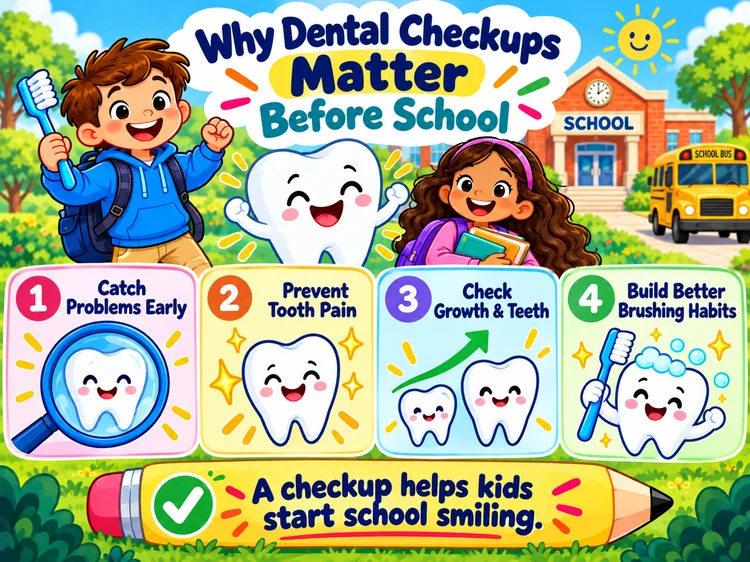
During a dental examination, we look for early decay, changes in gum health, and problems affecting the development of permanent teeth.
During a dental examination, we look for early decay, changes in gum health, and problems affecting the development of permanent teeth. X-rays may help identify cavities between teeth or other concerns that cannot be seen during the examination. We recommend them when clinically appropriate.
The appointment also allows us to review your child’s brushing technique. If plaque repeatedly collects around certain teeth, we can show parents and children which areas need more attention.
Dental Problems Parents Should Watch for During the School Year
Children don’t always tell you when something is wrong with their teeth. Watch for changes in how they eat, brush, or react to certain foods. These signs may point to a dental problem that needs attention.
- Tooth sensitivity: If your child complains about pain when eating or drinking something hot, cold, or sweet, a dental checkup can help identify the cause.
- Bleeding or swollen gums: Gums that bleed regularly during brushing may be irritated by plaque buildup.
- White or brown spots on teeth: New spots can be an early sign of enamel changes or tooth decay and should be checked by a dentist.
- Difficulty chewing: If your child avoids chewing on one side of their mouth or starts refusing certain foods, a painful tooth could be the reason.
- Persistent bad breath: If bad breath continues despite regular brushing and flossing, it may be worth checking for cavities, gum problems, or other causes.
- Chipped or loose teeth after an injury: A damaged tooth should be assessed by a dentist, even if your child says it doesn’t hurt.
If your child develops any of these symptoms, don’t wait for the next routine checkup to bring them up with your dentist.
How to Help Children Maintain Healthy Dental Habits at School
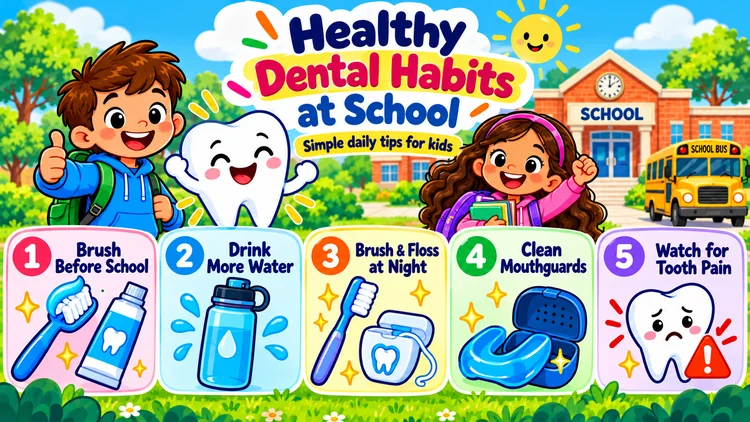
School days can get busy, and children don’t always think about their teeth between breakfast and bedtime. A few simple habits can help them make better choices while they’re away from home.
- Encourage water throughout the day: Pack a refillable water bottle so your child can drink water after lunch and between classes instead of reaching for sugary drinks.
- Choose snacks wisely: Cheese, fresh vegetables, and other low-sugar options are good alternatives to candy and sticky snacks that can cling to teeth.
- Avoid frequent sugary treats: Having sweets occasionally is different from snacking on them throughout the day. Try to keep sugary snacks to mealtimes rather than eating them repeatedly between classes.
- Remind children to speak up about dental pain: If a tooth hurts during lunch or a school activity, encourage your child to tell a teacher or contact you rather than ignoring it.
These small steps can help children make better choices at school and reduce their exposure to the frequent sugar intake that contributes to tooth decay.
Get Your Child Ready for the School Year
Has your child missed a dental checkup or developed a dental concern? Book an appointment with Smile Plus Dentistry for a children’s dental examination and preventive care.
When Should You Take Your Child to a Dentist in Surrey?
Most school-age children benefit from regular dental examinations, commonly around every six months. However, we may recommend a different interval according to their cavity risk and oral health history.
Some symptoms require more urgent attention. Contact a clinic offering dental emergencies if your child experiences severe tooth pain, facial swelling, a broken tooth with pain, or dental trauma.
If a permanent tooth is completely knocked out, seek emergency dental care immediately. Keep the tooth moist in milk if it cannot be safely reinserted. Never reinsert a knocked-out baby tooth.
Smile Plus Dentistry provides children’s dental care in Surrey, with weekday and weekend appointments. Our dentists can examine new symptoms and recommend appropriate treatment based on the findings.
Conclusion
A back-to-school dental checklist for Surrey families can help parents identify preventable dental problems before classes begin. These practical measures support oral health throughout the school year.
Smile Plus Dentistry provides dental examinations, preventive care, and treatment for children in Surrey. We can assess your child’s oral health and help your family maintain an effective home-care routine.
FAQ
These answers address common questions Surrey parents have about their children’s dental health during the school year.
-
Does My Child Need a Dental Checkup Before School Starts?
Your child should have a checkup if they are due for a routine examination or have developed new dental symptoms. An additional visit is usually unnecessary if their dental care is up to date and no concerns have appeared.
-
How Often Should School-Age Children Visit the Dentist?
Many children visit the dentist approximately every six months. However, children with frequent cavities, gum problems, or other risk factors may require more frequent examinations. The dentist will recommend an appropriate schedule.
-
What Are the Best School Snacks for Healthy Teeth?
Fresh fruit, vegetables, cheese, and unsweetened yogurt are practical options. Choose water instead of frequent juice boxes or sweetened drinks. Limit sticky sweets and snacks containing added sugar.
-
Should Children Brush Their Teeth After Lunch at School?
Brushing after lunch can be helpful, but it is not always practical. Brushing twice daily with fluoride toothpaste remains the priority. If your child cannot brush at school, drinking water after lunch can help clear loose food particles.
No Comments